A Life in Shadows
I was seven years old when I saw my first performance of shadow theatre, during a family holiday in Greece. I thoroughly enjoyed the experience, despite not understanding the language very well or knowing much about the characters in the story.
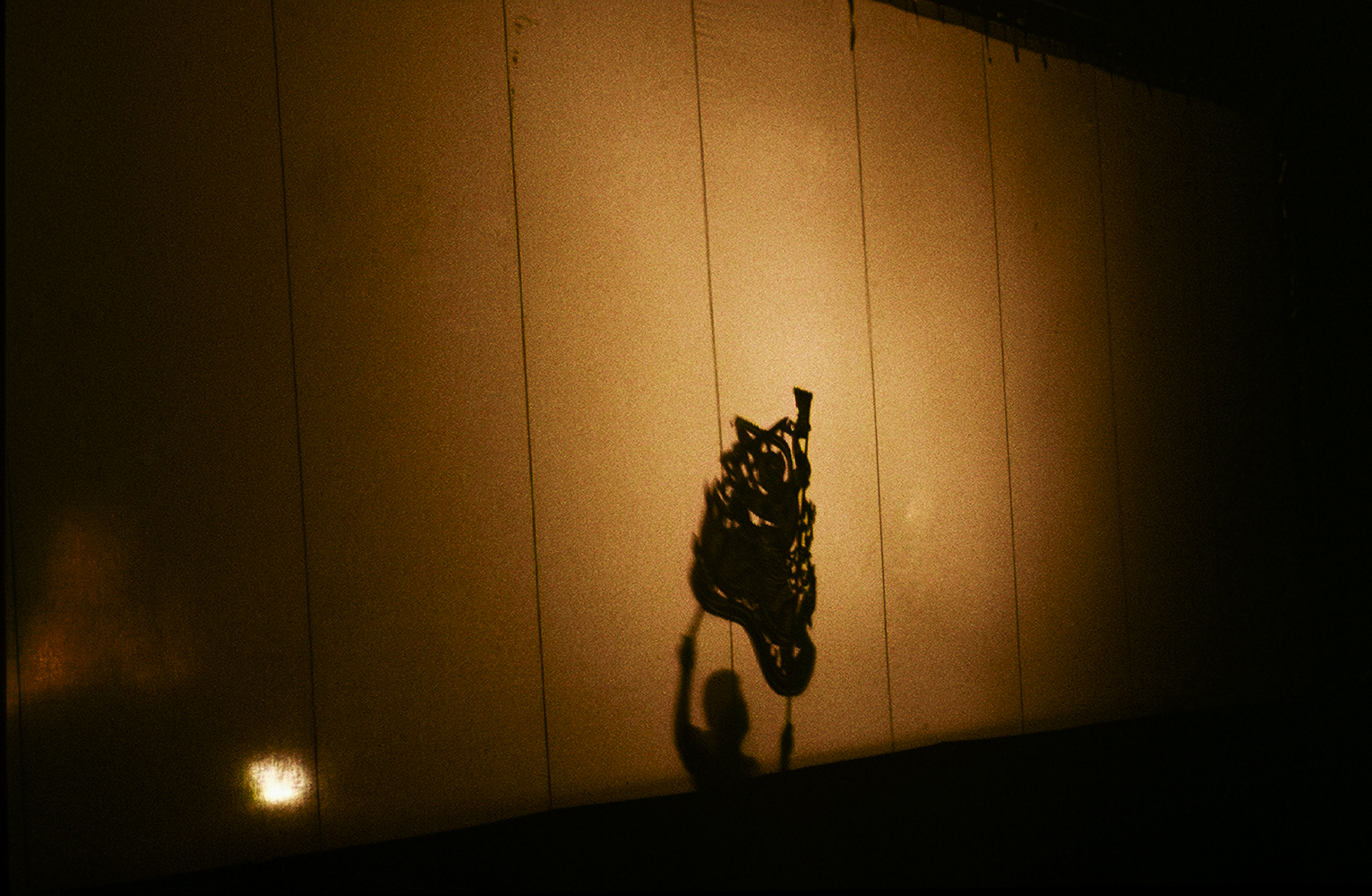
The impact of that night was not very obvious to me at the time. Many years later during my first trip to Asia in 1994, I saw performances of nang talung and wayang kulit in Thailand and Indonesia. My brain made an immediate connection with the art form. The more I watched, the more I became transfixed.
I was drawn in by the light, and intoxicated by the energy coming from the screen. The fight scenes were amazing. Shadow theatre was expressing and celebrating the beauty of the human spirit. The eternal struggle between good and evil. The puppeteer’s ability to make me enter the dream, to put myself in the story and to take sides. I think this is what attracted me all along. It was a perfect reflection of what was happening inside me. A guide to my moral compass.
In 1999 I was invited by Senawangi (Indonesian Secretariat of Wayang) to document their international wayang festival in Jakarta. Being immersed in shadow theatre over a three day period gave rise to the idea of working on a documentary project involving the art form. The spirits had spoken.
I realised that an immense amount of research and conversation on how best to go about it would be required. I needed a different approach to photographing my subjects in order to fully understand what I wanted to say and do. I had to ask myself: What are my concerns as a photographer? What are the desires of the person being photographed?
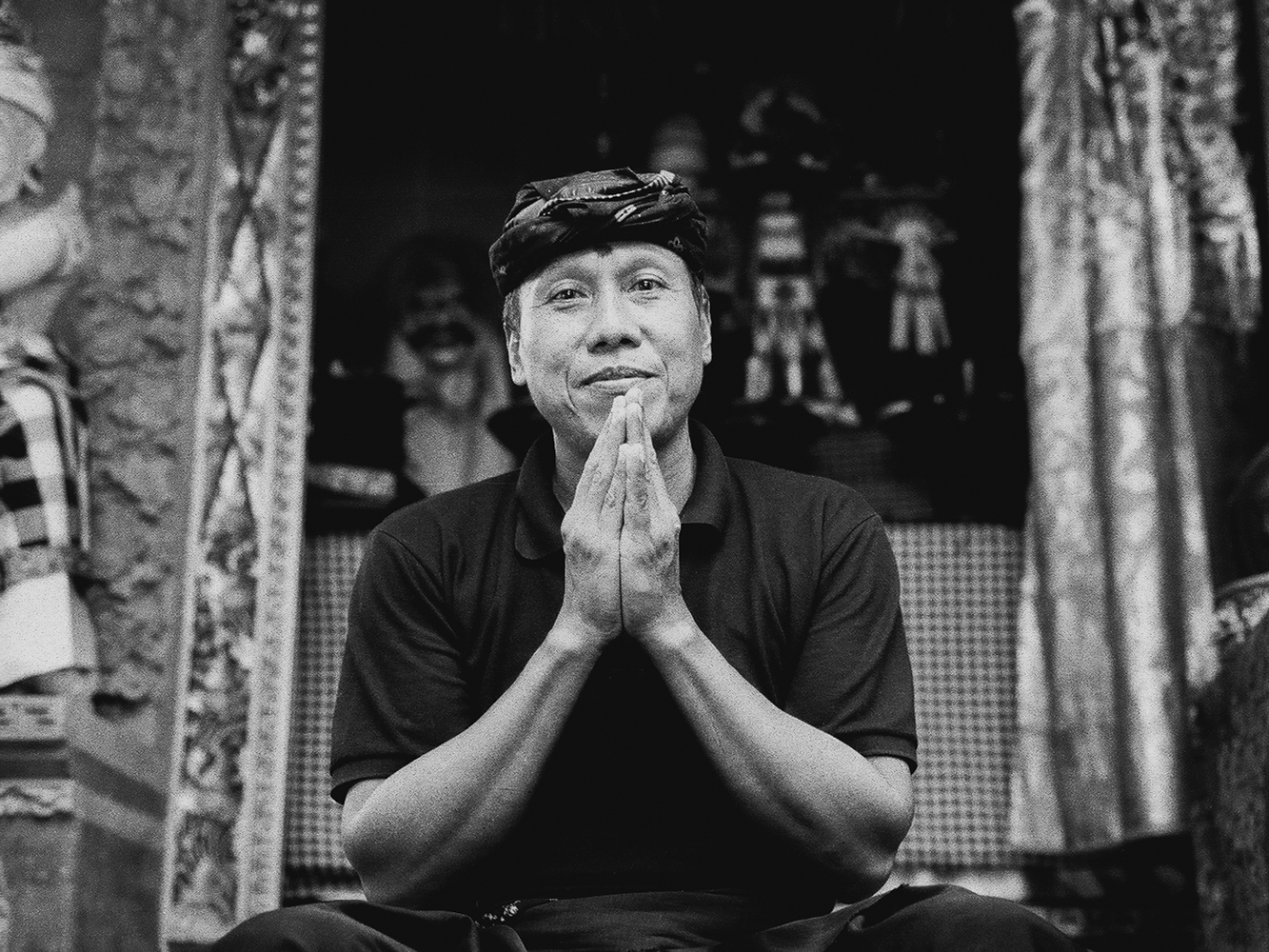
My idea was to photograph the puppet masters in their homes rather than the traditional performance or studio setting. By placing the emphasis on the experience of the photographic encounter, I hoped to dig a little deeper, to show a glimpse of the man or woman behind the artist, behind the mask. To strip away that layer of performance. It was intended to be a collaborative process rather than passive involvement. I also felt my own responsibility as a photographer to tell this story, despite the fact that it is not my own.
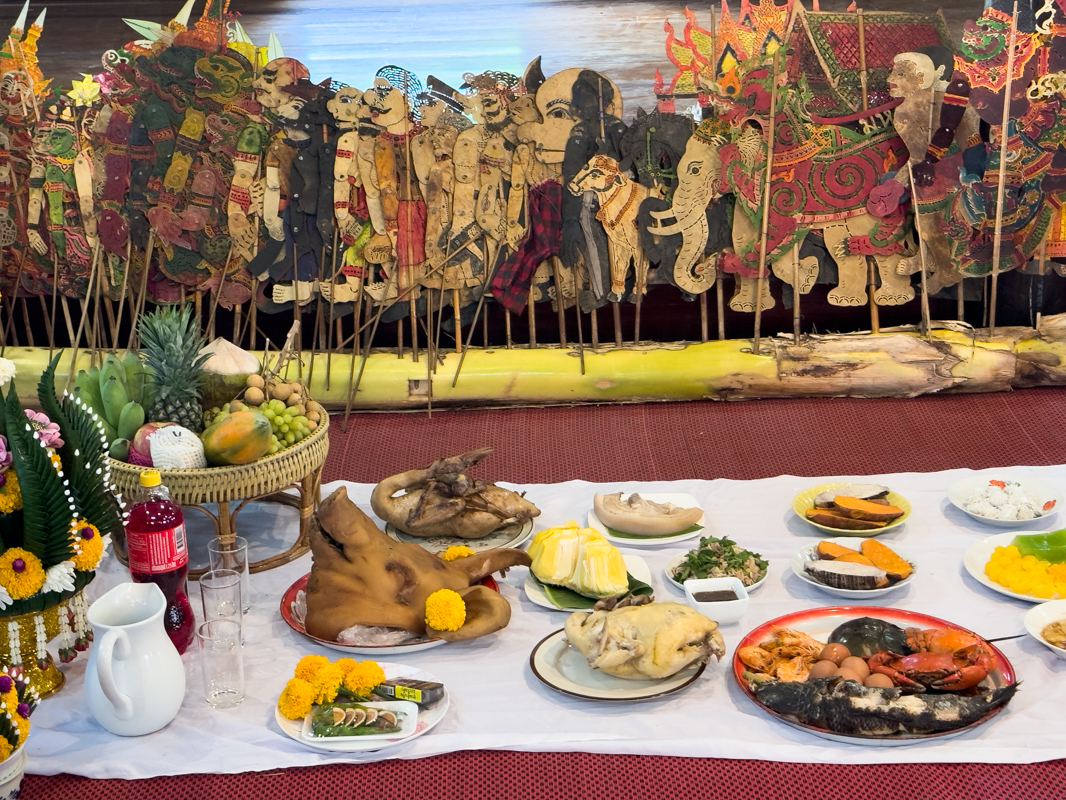
Between 1999 and 2023 I travelled extensively throughout South-East Asia, in particular, Thailand, Malaysia, Cambodia and Indonesia, with the express purpose of documenting shadow theatre in all its multiplicity. I focused on traditions that use the Ramayana and Mahabharata as their principle sources. Rather than just focusing on the most famous and most influential masters of the genre, I wanted to show all aspects of the art form: craftsmanship, music, fashion, puppets, ritual, audience, family and everyday life. I used both digital and analog photography to capture wayang’s principal philosophy and beliefs.
My first exhibition on the subject was in 2001 in Delhi, at the India International Centre. This was followed by more exhibitions, in 2010 at the Unima Festival in Perth, and in 2018 in Thailand as part of the Bangkok Photo Festival. Since 1999, I have spoken with, photographed and interviewed countless puppeteers, musicians, craftsman and academics in South East Asia. A Life in Shadows is the culmination of this ongoing investigation.
Everywhere I went I was treated as friend or as an honoured guest. Kindness mixed in with curiosity. I was worried at times about communicating with my subjects, but language barriers were always overcome with positive energy, broken English, sign language and numerous cups of hot sweet tea. A broader understanding of the customs and culture made things easier, as well as help from local friends. A warm smile, good eye contact and being open in your own heart goes a long way. I always approach my subjects with respect and make sure that they are comfortable with what I am doing. Yin energy is priceless.
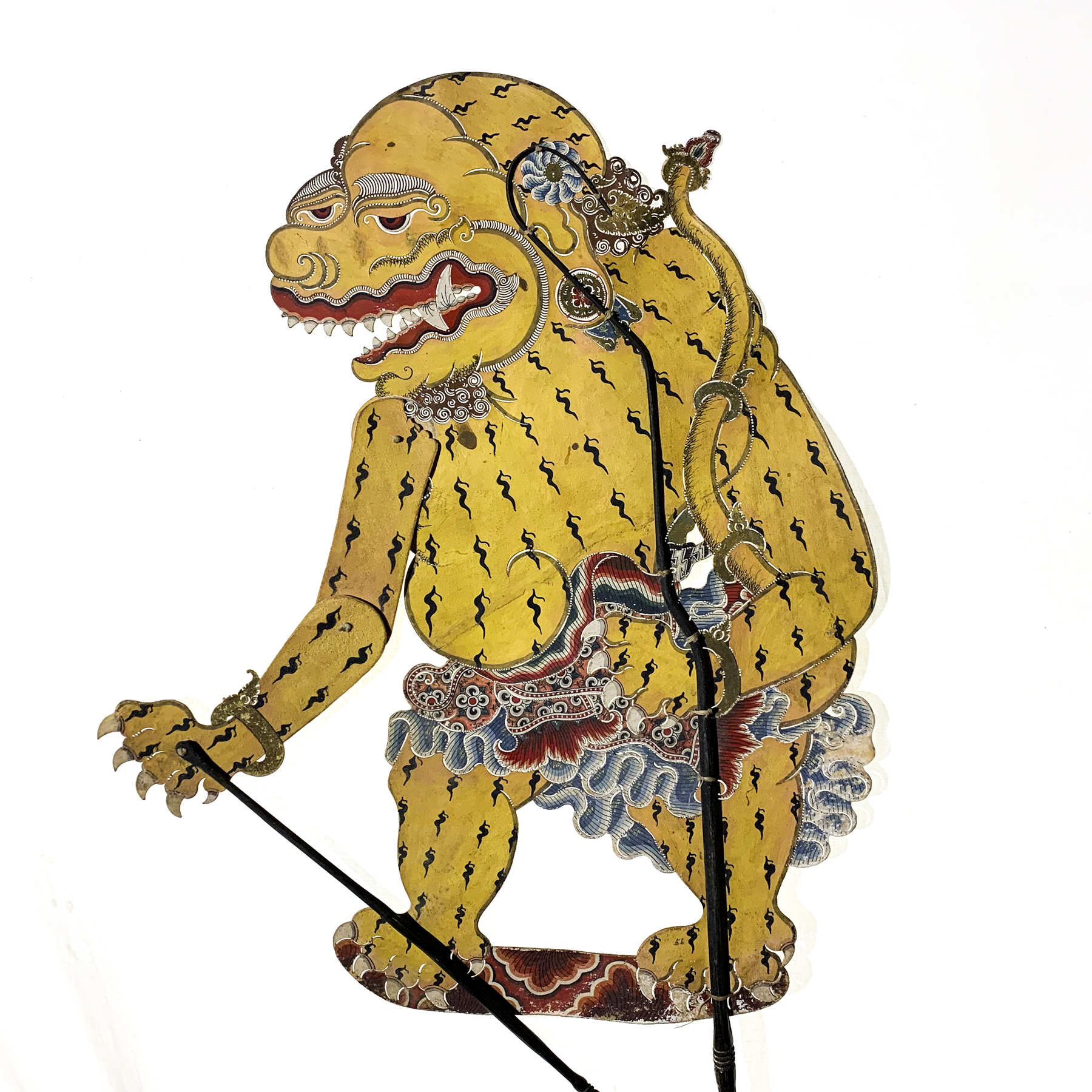
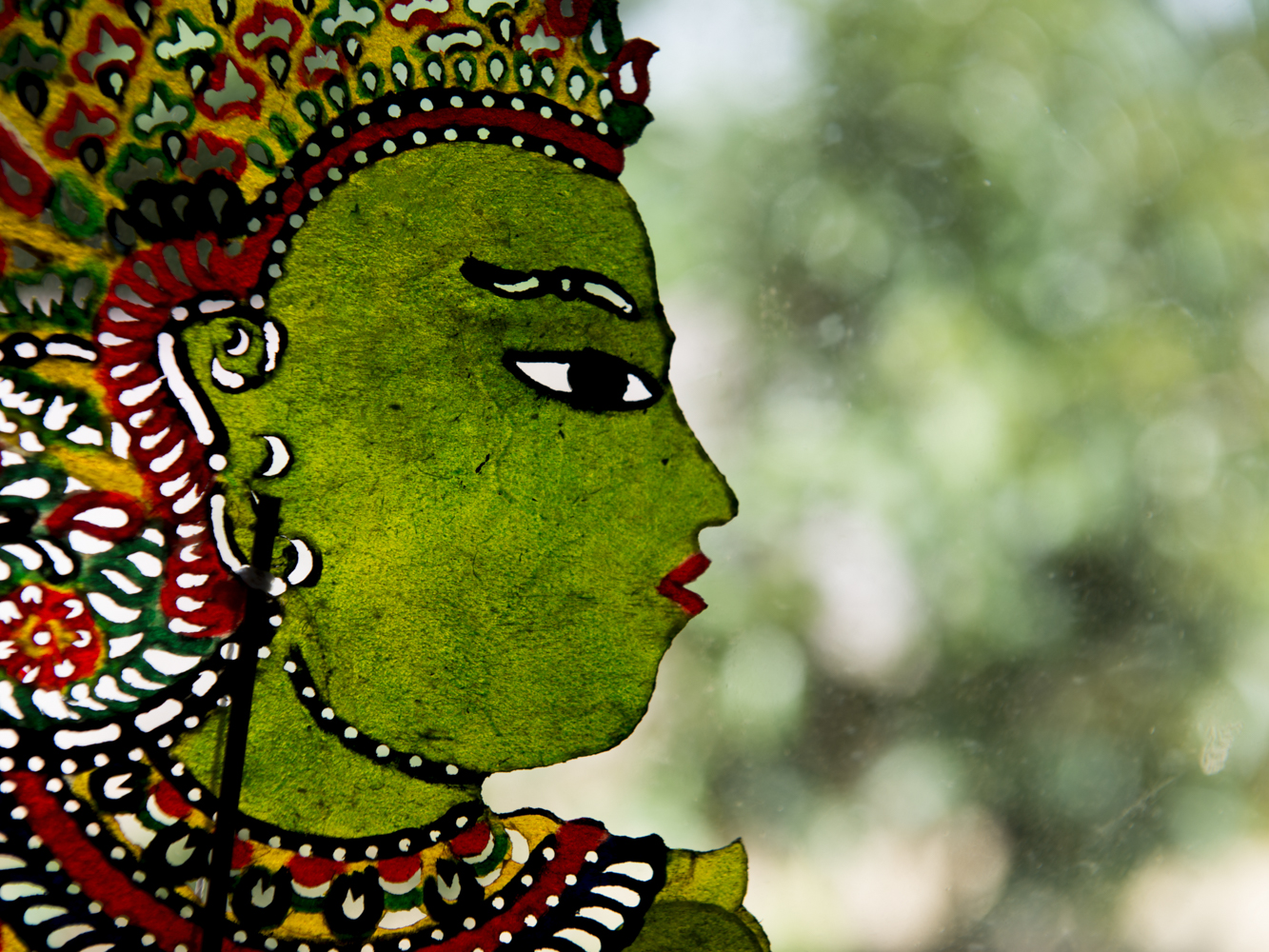
So what is shadow theatre all about? It is about family, community, education, tradition, story-telling, ritual, theatre, singing and above all entertainment. It has been significant in the development of culture and values in South-East Asia and it is interwoven into the complex fabric of identity and philosophy of life in the region. It is a great source of pride in the communities where the art form is prevalent. Local characters appear next to legends and gods. Stickers on the back of cars, and ads on TV let you know that you are in shadow country. Their distinctive shapes and vibrant colours are easily recognisable.
Unfortunately there is no definitive evidence for where and when shadow theatre originated, as there are many varieties throughout South-East Asia, China, India and the Middle East. In Javanese literature of around 1000 AD the wayang purwa is mentioned as a well-known theatre performance.
Many of the masters mentioned the problems they face on a daily basis just to get their voices heard. The difficulty of being accepted and wanted by the community. The importance of having a connection with the audience, an audience that was much more engaged with the performance – larger, more vocal, who stayed till the very end. They spoke of how shadow theatre has become more of a spectacle and a visual entertainment, moving away from its healing and educational roots.The core is still the same but over time the performances have been condensed and watered down. They fear some of the complexity and elegance of the art form has been lost with the use of modern language and modern instruments.
One of the long-term goals of the project is the creation of a digital library, which will act as an archival collection for future generations. This resource will be of value to academics, artists, researchers, tourists and puppetry organisations. It will include thousands of catalogued photographs, full sets of puppets from all the various styles, video recordings of performances and interviews with all the major players in the genre. To complement the images, a comprehensive account of all workshops, museums, galleries and theatres currently in operation will be compiled as well as list of puppeteers, their performance schedules and contact details.
With a wave of divergent cultures and art forms to compete with, my aim is to nourish, promote and shed some light on how important these storytellers are. To show how art and culture are rapidly changing. They have shaped the way we look at our heroes, and their contribution to the development of cinema has been immense. The level of skill and dedication that is required to become a master dalang is mind-blowing. Many of them make their own puppets, play all the musical instruments, learn long texts in ancient languages, sing, study movement and voicing, as well as perform for long period of time. Most of them struggle to make a living from their chosen art form. They are farmers, teachers, fisherman and factory workers by day and humble artists by night.
After living in South-East Asia for much of the last two decades, I returned to Australia in 2020. It broke my heart to leave but in a way it was necessary to step back, in order to give back. As time passed the images came to the fore as a way to address larger issues, such as power, patriarchy, identity, voice and appropriation.
I remember sitting in my hotel room, exhausted, after yet another long trip to see a performance of shadow theatre. I felt empty and ready to quit. I questioned my reasons for wanting to do the project, the quality of my work and the loneliness I felt deep in my soul. There is depth and complexity in Wayang that at times leaves me overwhelmed or confused. It felt like it would be a long time before I would achieve the clarity I sought in my images and writing.
That night I dreamed of the Wayang. It was the beginning of the performance and the dalang was whispering an ancient mantra. I strained to hear what he was saying as I moved closer to the light. He turned and spoke to me directly. Don’t stop, keep going. Whatever it is that you are looking for, it is right here. Whatever your heart and soul desires, you will find it. He pointed to the light as he turned his head to continue his performance. I woke up in a pool of sweat. I did not quit.
I know that I will continue taking photos of shadow theatre for as long as it is possible. I am hopeful that the outcome of the project will extend beyond documentation and to elevate awareness and appreciation of traditional arts in the region. In a world of homogenised culture, traditional art forms are the cornerstone of our identity. A better understanding of our differences and similarities would certainly increase empathy and interest in one another, which can only impact positively.
While it faces pressure from technology to change, the educational and cultural value of shadow theatre will make it survive the test of time. Floating between worlds, these men and women are writing and rewriting the world with shadow and light – very much like photography itself.
There is magic in the art form. A spiritual practice.
Constantine Korsovitis, April 2024